ACA’s Continuing Impact on Business

[This “sponsored content” article was published on bostonglobe.com on February 2nd.]

Six years after the Affordable Care Act (ACA) became law, U.S. health care policy and the delivery of medical services continue to undergo unprecedented change. Rockland Trust’s “Talking Business Advice Series” spoke with John E. McDonough, professor of Public Health Policy at the Harvard T.H. Chan School of Public Health, to get his take on what may lie ahead for businesses working with the ACA during this dynamic period.

Prof_McDonough_3

Q: You helped write the ACA. It’s an extremely complex law that even today is not fully understood by many Americans, including business owners and leaders. From a high-level perspective, where do things stand with it today?

A: Most people understand that the ACA is moving us toward universal health coverage. For the United States, the ACA is a revolution, an enormous set of changes that many see as a huge step forward and many others see as a wrong turn. Globally, however, all of the world’s advanced nations prior to the ACA already had health care schemes that, to varying degrees, met the insurance needs of their populations. So, while the ACA’s insurance expansions and reforms represent a great leap forward for the U.S., it is also true that when fully implemented by 2018, the U.S. will still have the most inefficient, wasteful, and unfair health insurance system of any advanced nation, even with the ACA reforms.

On the other hand, the ACA is also advancing an agenda of dramatic and necessary change in how medical care is delivered in the U.S. As a nation, we are now moving rapidly away from a financing system based on fee-for-service payments, (which is) a system that rewards hospitals, physicians, and other medical providers based on the quantity of services they provide without regard for the quality, effectiveness, and efficiency of those services. Because of the ACA, we are now moving quickly toward a new financing framework that rewards hospital, physicians, and providers based on the quality and value of the services they provide rather than the quantity.

Q: The public doesn’t necessarily view it in this way, does it?

A: You’re right. This change has gone unrecognized by the broad public, even as it moves forward in rapid and profound ways. A lot of what the ACA envisions is experimental. Some elements are working better than others; some continue to be fiercely debated. The U.S. doesn’t have all the answers in this effort, but we have the most dynamic set of experiments on this evolutionary path of any advanced nation on the planet right now. Health system leaders all around the world are very interested in this set of experiments and watching closely. That is something that corporate leaders, regardless of industry sector, ought to recognize, appreciate, and understand.

Q: What are some of the effects of these experiments on businesses?

shutterstock_267836885A: The immediate effects of the ACA depend on the context of the business itself. For example, the ACA’s impact is different for larger businesses with more than 50 full-time workers, companies with new responsibilities under the ACA’s employer mandate. It’s different for smaller employers and it provides some opportunities for many of them. It’s a unique new context for start-up businesses because of the health insurance marketplaces that provide new businesses with a new way to provide health insurance for their workers, enabling them to outsource their health coverage needs for themselves and their employees. And it enables all employees to get health care coverage regardless of pre-existing conditions, which was not possible in 45 states prior to the ACA.

So it’s contextual. It depends on the size and nature of the business as to whether there will be advantages or disadvantages—or both—to the Affordable Care Act.

Q: Would you expand on how smaller companies can outsource their health care responsibilities?

A: The ACA required the development of government-regulated health care exchanges (or marketplaces) across the nation. States had right of first refusal and 13 have chosen to establish their own exchanges while the rest are run by the U.S. Centers for Medicare and Medicaid Services (CMS). These exchanges offer coverage to all eligible individuals who can’t obtain insurance elsewhere, and many workers are eligible for financial subsidies to keep premiums and cost sharing affordable.

Alongside these public exchanges, new private health insurance exchanges have emerged. Unlike the public exchanges, which largely provide insurance to individuals seeking to buy non-group coverage, these private entities are aimed straight at the employer community. These private exchanges can enable employers to address their responsibilities under the ACA’s mandate to provide health insurance for their workers and do it in ways that are far less onerous for employers than in the past. It’s a way to outsource these responsibilities and to provide employees with a range of coverage choices. This is a significant change from the environment that existed prior to the ACA’s passage in 2010.

Q: How are larger businesses affected by the ACA?

A: Prior to the ACA’s passage, larger businesses were concerned about not being heavily shaped by the new law because most of these businesses already covered most of their employees. The impact of the ACA on larger businesses—especially those that self-insure—is far less than what they would experience in the standard commercial insurance market were they to go out and purchase traditional coverage.

Nonetheless, there are important new coverage requirements that impact the large employer market—whether self-insured or not. For example, lifetime or annual benefit limits on workers coverage is no longer permitted. Employer plans must cover the “essential health benefits” specified in the law. A worker’s insurance premium cannot exceed 9.5 percent of his or her household income or else the employer mandate penalty can be triggered. All employers must allow their workers to keep adult children on their family policies up to age 26. The ACA also sets a 90-day maximum waiting period before full-time workers are eligible for coverage.

There are also some elements of the law that many employers appreciate, including the ability to vary worker premiums by 30-50 percent in relation to workers’ use of tobacco products and participation in workplace wellness programs. Clinically proven preventive care services, such as mammography, must be provided to workers without any cost sharing.

The ACA’s impact is far more substantial in the traditional commercial health insurance market—but the impact on large self-insured employers is also meaningful.

Q: Are all the details of the ACA settled at this point?

A: This law is changing every day. There are at least three dozen things changing in relation to this law almost daily—in Congress, in federal agencies, in states, in the private sector—changes shaping how this law is unfolding across American society. And the pace of change hasn’t slowed, even now when we’re in the sixth year since the law was enacted.

857b31fa-2754-4722-91af-eb44dbc47690-acaThe ACA is likely to change even further next January when a new president and administration takes office, regardless of which party controls the White House and Congress. We can see an evolving agenda for changes from both sides of the political spectrum. Congressional Republicans have been united in their determination to dismantle the ACA for some time. In January, President Obama vetoed an attempt to cripple the ACA that was included in a budget reconciliation bill. The fact that this initiative passed Congress demonstrates that if Republicans control the White House, House, and Senate next January, there is a strong likelihood of significant dismantling of the law.

Conversely, if the Democrats hold the White House next year they also will have an agenda for significant changes to the ACA, though far less dramatic than what would happen under Republican control. Either way, we can anticipate some significant changes coming in 2017.

Q: How do business leaders prepare for that?

A: They need to keep abreast of whatever changes occur. Many organizations help businesses to stay on top of what’s changing or likely to change. It’s important for executives and managers who focus on a company’s health coverage to stay up-to-speed on what’s happening, and it’s important for those in the C-suite to understand the changes to factor these new variables into their strategic planning calculus.

As a nation, we are on a path of rapid and deep systemic change to our health system, and it’s going to unfold for some time to come. It is already transforming the fundamental nature of the U.S. medical care delivery system. The implications of it are vast and it will continue to unfold well into the future in positive, not-so-positive, and surprising ways.

It’s important for corporate executives to understand the nature of these changes as they happen.

The Harvard T.H. Chan School of Public Health will present a conference titled “Beyond the Affordable Care Act: The Next Frontiers for US Health Reform” on April 25-27. Visit https://ecpe.sph.harvard.edu/ for more information.

Amazing Accomplishments in Global Health in 2015

We get so caught up in the Donald and Hillary and Ted and Bernie shows.  Yet there is so much else going on in the world about which most Americans never hear — such as global health.

Permit me to draw attention to This Week in Global Health (TWiGH) which has been producing weekly live online programming on global health topics since mid-2014.  Hosted by Dr. Greg Martin, editor of Globalization and Health, (an open access journal) it’s compelling and accessible.  Recently, the group asked its experts to identify big accomplishments in global health in 2015.  The list grabbed my attention, so here it is – see the YouTube video as well: https://www.youtube.com/watch?v=vHxIYdQyejc

  1. Malaria: After 30 years and $565M, 2015 saw the development of the first-ever malaria vaccine; 50% of world population is at risk at risk and this development just might transform millions of lives for the better.
  1. HIV: The World Health Organization updated its guidelines for HIV treatment recommending that it be universal, and that everyone should be treated as soon as positive test result is made; those on treatment are far less likely to transmit the virus to another person.
  1. Climate change: The Paris Agreement on climate change puts in place the first international brakes on global warming, with 196 participating nations, and legally binding when signed by at least 35 countries.
  1. Bariatric Surgery: Though the spread of this treatment is controversial, it is considered the most important breakthrough in diabetes care since the discovery of insulin, with unrivaled health benefits.
  1. Ebola: We are seeing the beginning of the end of the West African Ebola Crisis – though the ordeal is far from over for 17,000 survivors.
  1. Polio: Last year we saw the elimination of polio from the African continent – the last cases were in Nigeria and in September the WHO said that polio is no longer endemic in Nigeria. Only Afghanistan and Pakistan remain as countries with polio.  Eradication is possible!

sdg5

  1. Approval of the Sustainable Development Goals: 2015 saw the final approval of new international health and social development goals; compared with the earlier Millennium Development Goals, the SDGs are more comprehensive, more inclusive, and financed to encourage sustainable development.
  1. Research: A Nobel Prize was awarded to researchers for novel therapies for parasitic diseases and malaria, demonstrating the vital role and positive impact of research on global health.
  1. Ending Extreme Poverty: The number of people living in extreme poverty (defined as less than $1.90 per day) is down 10%, down from over 900m in 2012 to under 700 million now; a big MDG goal to end extreme poverty by 2030.
  1. Maternal & Child Health: Infant mortality is down to an all time low, down 54% since 1990 down by to 5.9 million, from 63 deaths per 1000 live births in 1990 to 32 in 2015; maternal mortality is down 44%.
  1. Water – In 2015, 91% of the world’s population had access to an improved drinking-water source, compared with 76% in 1990.

Well, wow!  I didn’t know that! Let’s notice and celebrate real progress for citizens of the world.  Let’s hope that 2016 brings other good news for the world.

Bernie Sanders and Hillary Clinton on Health Care – Who’s Got the Plan?

It’s funny how things turn out on the campaign trail. Since all Republican presidential candidates pledge to repeal the Affordable Care Act/ObamaCare, they have little to argue about. The fireworks are among Democrats as Hillary Clinton and Bernie Sanders argue the future of US health reform and, specifically, the merits of Sanders’ new single payer/Medicare for All scheme, released Sunday evening hours before the Democrats’ final pre-primary debate.

Clinton, fighting a Sanders surge in the Iowa and New Hampshire Democratic primaries, has been landing punches to throw his momentum off balance. Meanwhile, Sanders keeps humming the single payer tune that the Democratic base adores (see the Kaiser Poll below), offering some new melodies and riffs in his revised plan.

single payer 1

Sanders’ proposal matters because it shows how progressive thinking has shifted and because it calls into question whether Democrats have the staying power and political will to defend one of their principal accomplishments in the past 50 years, the ACA. Here are key points about the Sanders plan: Continue reading “Bernie Sanders and Hillary Clinton on Health Care – Who’s Got the Plan?”

A Looming Ballot Question May Upend Mass. Hospital Payments

Below is an article — Setting Hospital Prices by Ballot Initiative — just published in the winter edition of Commonwealth Magazine:

A LOOMING 2016 ballot initiative threatens to upend the foundations of hospital finance in Massachusetts, even if the measure never reaches the voters. The clash involves a fractured hospital community, insurers, a labor union, and state government in a controversy more than 25 years in the making.

For decades, savvy Massachusetts policy entrepreneurs have learned to use the threat of a statewide ballot initiative to compel legislative change that would never have happened absent the ultimatum.  I saw this up close in 1994 when Common Cause forced major campaign finance reform through a Legislature eager to avoid the group’s more punishing ballot proposal.  In 2000, health care advocates used this strategy to win passage of a managed care patient bill of rights. In 2014, the Massachusetts Nurses Association used the tool to score a new policy in their 20-year grudge match with the Massachusetts Hospital Association over state-mandated nurse/patient staffing ratios. Used well, the strategic ballot initiative is a proven and powerful public policy tool. Continue reading “A Looming Ballot Question May Upend Mass. Hospital Payments”

Please Remember This Number – 22 Million

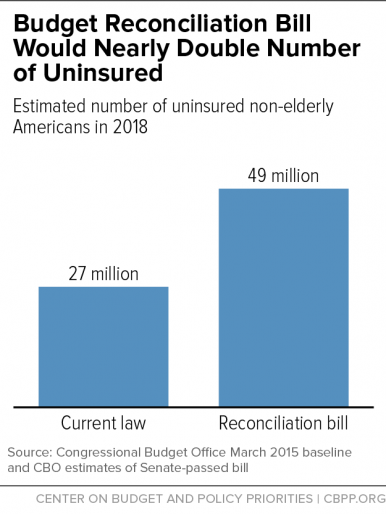
22 million – that’s how many Americans would lose their health insurance, according to the U.S. Congressional Budget Office, if the reconciliation legislation approved by the U.S. House of Representative yesterday by a 240-181 vote were to become law.

The U.S. Senate approved the same bill in December and the House adopted it yesterday with no changes, so it is heading to the White House where President Obama is certain to veto the measure. The likelihood that House or Senate Republican leaders could summon the needed votes to override that veto is zero.

Recon 2016It’s easy to dive into the political games involved in this legislation because there are so many. Doing so, though, ignores our responsibility to recognize what this Congress has done – put itself on record to cancel health insurance for tens of millions of Americans and offer nothing, zero, to mitigate the harm to mostly low and lower middle income families.

Here are the bill’s key elements:

  • Eliminate the ACA Medicaid expansion
  • Eliminate the ACA’s premium and cost sharing subsidies to help lower middle income Americans buy private health insurance
  • Repeal the ACA’s individual mandate which helps to ensure a healthy risk pool of enrollees to keep premiums affordable
  • Cancel all federal funds to Planned Parenthood

Continue reading “Please Remember This Number – 22 Million”

Why Republicans Hate the ACA So Much

both increases literally reversed the majority of the last 20 years decline in the effective tax rate of America’s 400 wealthiest taxpayers!

This week, the US House of Representatives will take up reconciliation legislation, amended and approved in the US Senate last month, that would drill major, damaging holes in the Affordable Care Act.  Though the bill has zero chances of becoming law because of a certain veto by President Obama, it is – by the Democrats’ count – the 61st time the House has voted to repeal all or significant parts of the health reform law.

Why, people often ask me, do Republicans hate the ACA so much?

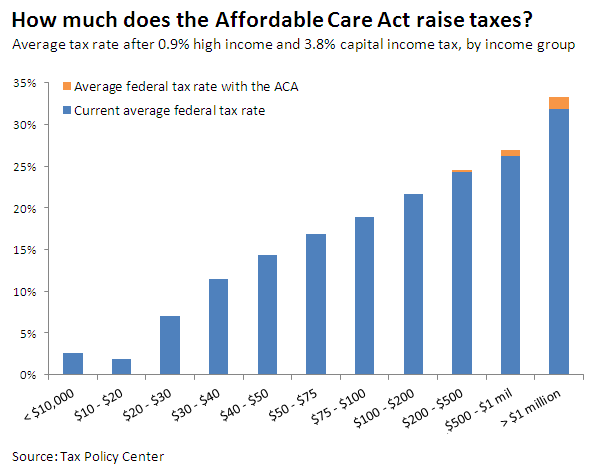
This past week’s New York Times Upshot article, I believe, provides a major part of the answer.  Briefly, “it’s the taxes on the wealthy, stupid.”  Specifically, it’s about two new Medicare taxes that went into effect in 2013 only on higher income Americans:

  1. ACA Medicare Part A Payroll Tax: Beginning in 2013, individuals with earnings above $200,000 and married couples making more than $250,000 got an increase in the Medicare part A payroll tax of 2.35%, up from 1.45% (a .9% increase), on adjusted income over the threshold. (2016-25 take = $123 billion)
  2. ACA Unearned Income Tax: This same group also now pays a new 3.8% unearned income (capital gains) tax on interest, dividends, annuities, royalties, rents, and gains on the sale of investments over the threshold. (2016-25 take = $222.8 billion)

It’s a lot of money and it’s a lot of money taken exclusively from the top 5% of America’s wealthiest, ($345.8 billion between 2016-25) and especially from the most wealthy as the chart below demonstrates: how-much-does-the-affordable-care-act-raise-taxes-really-01

As the Times article makes clear, these new taxes are so damn big (when combined with higher taxes from the 2012 American Taxpayer Relief Act) that both increases literally reversed the majority of the last 20 years decline in the effective tax rate of America’s 400 wealthiest taxpayers! Continue reading “Why Republicans Hate the ACA So Much”

An ACA Damage Assessment: Real, Non-Critical, and TBD

The post below was first published yesterday on the Commonwealth Magazine website:

On one thing all Affordable Care Act watchers can agree: This autumn saw important developments and changes relating to the nation’s health reform law. How much and how serious? Any immediate assessment is incomplete and the full impact only will be evident through the lens of the 2016 presidential and Congressional election results. Until then, some impacts are clear. So let’s consider…

roadrunnerFirst, what has happened?  Here is my list of key developments:

  •  Congress delayed or suspended for one or two years the operation of three taxes that help finance the ACA: the so-called “Cadillac tax” on high-cost employer-sponsored health insurance policies; the medical device industry tax; and the health insurance provider tax.
  •  The House and Senate are close to final agreement (coming in January) to use the budget reconciliation process to repeal major, critical portions of the ACA, legislation that President Obama will veto and will see his veto sustained.
  •  14 of 23 co-op health insurance plans created from the ACA have collapsed; also, UnitedHealthcare is dropping out of the ACA market.
  •  The third Open Enrollment process is proceeding smoothly with larger than expected numbers signing up for coverage – final numbers yet to come.
  • On Medicaid, more holdout states are warming up to accepting the ACA expansion, and Kentucky’s new Tea Party governor has abandoned his campaign commitment to repeal that state’s expansion.
  • More and more experts, from both sides of the ACA divide, are advancing robust and noteworthy proposals for ACA replacement or improvement.

Continue reading “An ACA Damage Assessment: Real, Non-Critical, and TBD”

The $879 Billion Footnote — And The Financing Path To ACA Repeal

[This post was originally published on December 4th on the Health Affairs Blog.  It was co-written by me and Max Fletcher, a student at the Harvard TH Chan School of Public Health.]

The November 3 election of Matt Bevin as governor of Kentucky will provide an important indication of the seriousness of Republican intentions to undermine and repeal the health insurance expansions of the Affordable Care Act (ACA). Early in Bevin’s campaign, he expressed unambiguous intent to repeal Governor Steve Beshear’s executive order that expanded Medicaid; during the general election campaign, Bevin backpedaled and proposed adopting an Indiana-like Medicaid waiver to require significant enrollee cost sharing and an enrollment freeze. Bevin also prefers to close the successful Kynect health insurance exchange and transfer operating duties to the U.S. Department of Health & Human Services.

Whatever the outcome, the moves by the Tea Party-endorsed new governor will provide the best preview of what the nation may expect if Republicans take control of the White House and retain majorities in the Senate and the House of Representatives in January 2017. Many eyes will watch Governor Bevin’s health care moves from across the political spectrum. Continue reading “The $879 Billion Footnote — And The Financing Path To ACA Repeal”

No Time to Go Wobbly on “One Care”

I am reprinting an article I wrote for the new issue of Commonwealth Magazine concerning One Care, Massachusetts’ bold and risky experiment to coordinate care for the so-called “dual eligibles” who are under age 65 and disabled.  It has been a tough ride in the program’s first two years.  In this piece, I give the background and context for One Care and propose that we stay the course as the smart and right thing to do:

one-care-banner-headerBACK IN 2008, when I was working in the US Senate on national health reform, a delegation of 20 business leaders from the New England Council visited Capitol Hill to offer advice. The group’s leader was Charlie Baker, then Harvard Pilgrim Health Care’s CEO. I recall his one recommendation: “You have to do something about dual eligibles because they are one of the most important and expensive pieces of the puzzle.”

As Massachusetts now struggles to sustain One Care, its nationally significant dual-eligibles demonstration project that launched in October 2013, Gov. Baker’s hope is happening. Given the project’s rocky and difficult first 18 months, he could be forgiven for wondering if he could rewrite that wish. Continue reading “No Time to Go Wobbly on “One Care””

Will 61 Be the Charm? The New Republican Effort to Gut the ACA

[Note: This post was first published on the Health Affairs Blog.]

For the 61st time since 2011, Congressional Republicans are moving legislation to undermine and dismantle key elements of the Affordable Care Act (ACA). This time, though, will be different.

First, this will be the first time Republicans will use the budget process known as “reconciliation” to advance repeal. Using a budget reconciliation bill prevents Democrats from filibustering the legislation in the Senate, meaning only 51 votes are needed for passage in expedited debate.shampoo

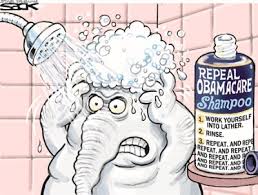
Second, this will be the first time that the House and Senate both pass similar legislation to damage the law. As a result, this will be the first time that anti-ACA legislation will reach President Barack Obama’s desk. The President’s veto of this measure is guaranteed, as are the needed votes in the House and Senate to sustain his veto. So this will be another exercise in ObamaCare-Kabuki Theater with some new twists.

What’s In The Reconciliation Package?

The key elements in the legislation, developed by three House Committees (Ways and Means, Energy and Commerce, Education and the Workforce) including: Continue reading “Will 61 Be the Charm? The New Republican Effort to Gut the ACA”