Financing the ACA — Explained, Updated, and Revealed!

Now that King v. Burwell has been relegated to history’s dustbin, let’s return for a deeper dive into the June 2015 report from the Congressional Budget Office (CBO), “The Budgetary and Economic Effects of Repealing the Affordable Care Care Act,” because much juicy and compelling detail has been ignored.  See my original article here.  Let’s start with this table, an earlier version of which (without 2016-25 numbers) I created for my 2011 book, “Inside National Health Reform.”

Slide1

The table contrasts ACA spending and revenues as calculated by CBO in March 2010 (when the law was signed) for the period 2010-2019 with brand new CBO estimates released last month for 2016-2025 (in bold).  Not all items in the 2010 analysis were included in the 2015 version, though the biggies are.  The table shows costs/spending and revenues/savings according to each respective ACA title — I created both versions using CBO data.

What can we see?  Lots!

First, look at the projected reductions in numbers of uninsured Americans because of the ACA.  In 2010, CBO expected the ACA would lower the nation’s uninsured by 32 million by 2019, half from private insurance/exchanges and half from Medicaid.  In the 2015 report, that number is 24 million.  Eight million fewer insured Americans — a 25% drop(!), and I’ve seen no comment on this.

Second, look at the “$ Spent” column to see what the ACA actually buys — health insurance, private and Medicaid.  All over this chart, by the way, the 2016-25 money figures are much higher than the 2010-19 ones because the ACA’s big parts did not take effect until 2013 and 2014, while 2010-2012 had little spending or revenue, and while the 2020-2025 costs are high.  The $54B in Title 3, by the way, pays for closing the Medicare Part D prescription drug “doughnut hole” or coverage gap.

Third, let’s look at the final column that includes ACA financing in the form of: 1. Title 3’s Medicare spending reductions/savings ($879B); 2. Title 9’s new taxes on high income wage earners, and on drug, medical device, and insurance companies ($718B); and 3. Title 1’s employer and individual mandates ($210B), plus others.  The chart shows that Title 3’s Medicare cuts and Title 9’s new taxes pay for the Title 1 and 2’s insurance coverage expansions.  If you understand this, you get the ACA’s essential financing formula.

Because of missing data, all these numbers don’t add up to the deficit reduction number at the bottom of the table, though there’s enough to show the essential picture.  As detailed in my June CBO post, in 2010 the CBO projected that the ACA over 10 years would reduce the federal deficit by $124 billion; an apples to apples comparison now shows deficit reduction at $353 billion (2016-25); when including the Republicans’ voodoo economics “dynamic scoring,” this reduction drops to $137 (with a ridiculously wide variance).

There’s so much more compelling detail; here are a few important nuggets:

  • Title 1’s $210B revenue comes entirely from the employer and individual mandates, $167B from the former, and $43B from the latter.  Big lift to repeal — especially the employer mandate.
  • Title 9’s new taxes on the pharmaceutical, medical device, and insurance industries have new numbers.  And the winner is:
    • Health Insurance — $142B
    • Pharmaceutical — $30B
    • Medical Device — $24B
  • Title 9’s so-called “Cadillac Tax,” a new 40% excise on expensive health insurance policies scheduled to take effect in 2018, had estimated revenue at $32B (2010-19) and now comes in at $87B (2016-25), almost a tripling as business and labor groups begin pushing hard for repeal. Another big lift.
  • The savings from Title 3’s reductions in Medicare payments to hospitals, health insurers, home health agencies, and other providers has risen from $449B (2010-19) to $879B (2016-25).  This is perhaps most important to understand.  Except for insurers, hospitals and other providers agreed to these reductions to help finance expanded coverage. During the 2010, ’12 and ’14 elections, Republicans incessantly kicked Democrats for these reductions, charging them with cutting grandma’s Medicare to pay for Obamacare!  (Simplified, but true.) But then, in their subsequent budget proposals, House Republicans led by then Budget Chair Paul Ryan (R-WI) always included complete repeal of the ACA except for the Title 3 Medicare reductions!

Some wonder, how could Republicans, given the chance, ever finance repealing the ACA?  Here is the answer.  If you repeal the entire ACA, except for the the $879 billion in Medicare reductions, that bill would reduce the deficit.  A Republican President, working with a Republican-controlled Senate and House, using budget reconciliation rules which cannot be filibustered and only require 51 votes, could make that happen.

Inconceivable?  Consider this.  Twice, US Senate Finance Committee Chair Orrin Hatch (R-UT) and US House Commerce and Energy Chair Fred Upton (R-MI) have released the “Patient Choice, Affordability, Responsibility, and Empowerment Act” (Patient CARE) as their plan to repeal the ACA.  Read their release and then click on the full description and read footnote 3 on page two and here’s what you will find:

“All provisions of PPACA and HCERA are repealed except for the changes to Medicare. Medicare reforms should be considered in the context of reforms to improve Medicare and prevent its insolvency.”

[PPACA and HCERA are the two statutes that, together, constitute the ACA.]  The “changes to Medicare” — that’s the $879 billion.  If you don’t think Republicans have a strategy to repeal the ACA if they win the White House and hold the Senate in 2016, think again.

The Supreme Court’s Surprise that Wasn’t

Those watching the U.S. Supreme Court process on the King v. Burwell suit that almost upended insurance subsidies for about 6.4 million Americans knew that three outcomes were possible – 5-4 for the plaintiffs, and 5-4 or 6-3 for the government. That indicated to me a two-thirds probability of a pro-Affordable Care Act ruling.

carygrantIntellectually, that’s what I expected. Too many long-standing and widely-shared judicial precedents would have been trampled by a ruling for the Libertarian/Cato Institute’s lawsuit – including the core Chevron principle that “context matters,” and the Pennhurst principle that federal laws shall not “surprise states,” among others. With a ruling the plaintiffs, the Court’s only way out would be to repeat the 2000 scandalous ruling in Bush v. Gore that the Court’s decision installing George W. Bush as President would represent no precedent for any future case.

Still, it would have been foolhardy to assume any certain result from this Supreme Court. Happily, the decision was not close. The window of opportunity for using the Supreme Court to disassemble the ACA is now all but ended, even as a baker’s dozen of cases are still in circulation. Continue reading “The Supreme Court’s Surprise that Wasn’t”

CBO Says ACA Repeal Will Increase Uninsured and Federal Deficits (by a lot)

My favored definition of “health policy wonk” is someone who reads health reports from the Congressional Budget Office AND enjoys it.  Guilty as charged.  Last Friday’s new report, “Budgetary and Economic Effects of Repealing the Affordable Care Act,” was enlightening and fascinating.  It will be a benchmark document during the coming two years of debates over the ACA’s future — and required reading for my students this fall.  Lucky them!

This report is already a fountain of numbers thrown around by both parties — and it reflects the changing politics at CBO under Republican control of the U.S. House of Representatives and the Senate.  What are the key numbers?

  • Repeal on 1/1/2016 would increase the federal deficit by $353 billion between 2016-2025, or by $137B using the CBO’s new “voodoo” macroeconomic analysis;
  • Repeal would cause “federal budget deficits to increase by growing amounts after 2025, whether or not the budgetary effects of macroeconomic feedback are included.”
  • Repeal would increase the number of uninsured Americans by 19 million in 2016 and by 24 million in 2020;
  • Repeal would increase the US gross domestic product (GDP) by 0.7% between 2021-25, with “substantial uncertainty” regarding this estimate in both directions.cbo 2015 2

So there you have it.  Repealing the ACA, the premiere policy goal of just about every Republican House and Senate member, will dramatically increase both federal deficits and the numbers of uninsured Americans in a report signed, sealed, and delivered to Capitol Hill by Republicans’ newly appointed CBO Director Keith Hall. Hall replaced the prior highly respected CBO Director Doug Elmendorf (who was just announced as the new Dean of the Kennedy School of Government at Harvard beginning next January). Continue reading “CBO Says ACA Repeal Will Increase Uninsured and Federal Deficits (by a lot)”

Of Secrets and Share Responsibility

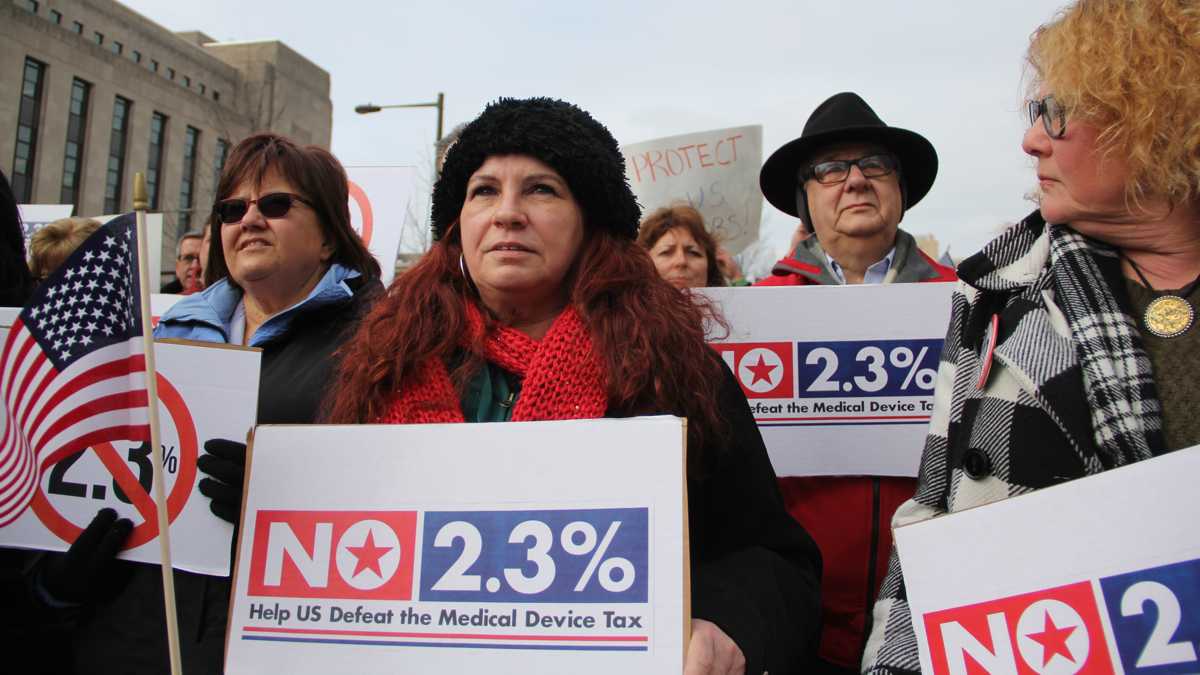
One proposal to change the Affordable Care Act would repeal the law’s 2.3 percent tax on sales of medical devices.  On June 2, the Ways and Means Committee of the House of Representatives voted, once again, to rescind the tax and a vote in the full House is expected soon. Even progressive Democrats such as Sens. Elizabeth Warren (D-MA) and Al Franken (D-MN), who hail from states where the medical device industry is strong, support repeal. But repeal is a bad idea on principle and impact. If Congress insists on repeal, they should at least demand something in return for the public, namely, an end to the medical device industry’s secrecy clauses and gag rules.medical-device-tax

The medical device tax is one of many revenue increases included in the ACA so that the law does not increase the federal deficit.  Pegged at $29 billion in new revenues over ten years, it embodies a principle called “shared responsibility.” To achieve comprehensive health reform, every system stakeholder contributes something to make reform succeed, and nobody gets off the hook.  Who else pays?  Insurance companies, hospitals, home health agencies, drug companies, businesses, labor unions, hospices, consumers, tanning salons(!) – just about every constituency connected to health care pays something to achieve the coverage and system improvements in the law.

The medical device tax has been in effect since January 2013 with no disastrous effects.  More than 75 percent of it is paid by the largest 1 percent of firms such as Johnson & Johnson and Medtronic.  (J&J actually opposes repeal.)  But the medical device lobby has focused on repeal like a laser beam gaining support among Members of Congress to accompany their tens of millions of dollars in campaign donations.

If Congress is determined repeal this tax, Members should demand something from the medical device industry to improve the health care system as an alternative form of shared responsibility.  It’s this – Congress should ban the practice common among medical device makers requiring that hospitals never disclose to anyone how much they pay for the devices they purchase, especially implantable medical devices such as hip and knee implants, coronary drug eluting stents, and pacemakers. The price secrecy clauses written into contracts forbid hospitals even telling their own surgeons the costs they incur and pass onto patients. Continue reading “Of Secrets and Share Responsibility”

President Obama on the ACA at the Catholic Health Association

Today, President Obama spoke to the Catholic Health Association, the nation’s organization of Catholic Hospitals, about the progress and success of the Affordable Care Act.  It’s just under 29 minutes and, in my humble opinion, it’s really worth your time to view, especially in the stories he tells of individual citizens whose lives have been rescued by this law.

Please give it a look and I don’t think you will regret it.  President Obama takes his lumps every day, and I’m proud to have him as our President.

Republicans’ New Bridge to Nowhere

It’s been nearly 5 and 1/4 years (63 months for those counting) since President Obama signed the Affordable Care Act into law.  Since then, Republican Congressional leaders have continually declared their intentions to advance their own plan to repeal the law and replace it with something else.  This took on new urgency this year because of the U.S. Supreme Court’s (SCOTUS) decision to hear the King v. Burwell lawsuit that would eliminate all insurance subsidies to ACA private coverage enrollees in the 34 states with federal — as opposed to state — run exchanges/marketplaces.

New federal data show that 6.4 million would lose their insurance subsidies if the Court rules for the plaintiffs (King) and against the government (Burwell).

All this year, Republican lawmakers in the Senate and House have been insisting they would have a replacement plan out and even scored by the Congressional Budget Office before a SCOTUS decision in late June (an assurance made by House Ways and Means Chairman Paul Ryan (R-WI).

1 McCarthy Rep
US House Majority Leader Rep. Kevin McCarthy (R-CA).

Now, House Majority Leader Kevin McCarthy (R-CA) has announced the Republicans will have no replacement plan to unveil until after a Supreme Court decision is released, expected late this month, and Senate Republicans are stating the same.  As Jon Cohn notes in the Huffington Post, not only is there no plan, Republicans have not even held a hearing on the matter — though they repeatedly berated Obama Administration officials, notably Health & Human Services Secretary Sylvia Burwell, for having no contingency plan in the event of an adverse ruling in the King case.

What about Congress? [asked Supreme Court Justice Antonin Scalia]  You really think Congress is just going to sit there while – while all of these disastrous consequences ensue?”  The Solicitor General responded “well, this Congress, I ….,” a response which generated laughter.

Some may quibble and point to a number of ACA replacement bills filed by various members.  None of them have even received a committee hearing, much less a committee markup, or a vote in either chamber.  The most prominent replacement proposal, the Patient CARE Act, from Sen. Richard Burr (R-NC) and Orrin Hatch (R-UT) and Rep. Fred Upton (R-MI), which has had two public unveilings since 2013, has yet to be translated into legislative language and sits as a well-trumpeted narrative description of a non-existent bill.

I believe it’s pretty plain what is happening here.  Republicans are quite capable of uniting around what they all oppose and quite incapable of uniting behind what they would propose as an alternative.  With firm control of the House and Senate, the GOP has a golden opportunity to advance a comprehensive and clear alternative to the ACA.  They just can’t do it — short, medium, or long term — it’s a bridge way too far for them.  A bridge to nowhere.

Is the “Triple Aim” a Part of the Problem?

If you care about transforming the delivery of medical care in the U.S., then you should should read a blog post from last week by Paul Levy, former CEO of Beth Israel Deaconess Hospital in Boston and conductor of “Not Running a Hospital.”  It’s titled: “The Triple Aimers Have Missed the Mark.”

For those who don’t know, the “Triple Aim” was the 2008 invention of Dr. Donald Berwick and colleagues from the Institute of Health Care Improvement (IHI) which Berwick triple-aim-graphic1-300x225created in the last 1980s when he also developed the now-essential medical care construct of “continuous quality improvement“.  As Berwick and colleagues articulated in a 2008 article in the journal Health Affairs:

“Improving the U.S. health care system requires simultaneous pursuit of three aims: improving the experience of care, improving the health of populations, and reducing per capita costs of health care. Preconditions for this include the enrollment of an identified population, a commitment to universality for its members, and the existence of an organization (an “integrator”) that accepts responsibility for all three aims for that population.  The integrator’s role includes at least five components: partnership with individuals and families, redesign of primary care, population health management, financial management, and macro system integration.”

One can look at the Affordable Care Act and see the Triple Aim model at work in numerous places.  The key notion behind the Triple Aim is to ask: what are we trying to accomplish in the U.S. medical care system and where are we trying to go?  A quick Google search will give some indication of how far and wide the concept has traveled over the past 7 years, including well beyond U.S. borders.  It is a global phenomenon.

Now comes Paul Levy with a bucket of cold water: Continue reading “Is the “Triple Aim” a Part of the Problem?”

King v. Burwell — The Actuaries Explain All

In the late 1980s, Dr. William Hsiao, a colleague of mine at the Harvard Chan School of Public Health, my former professor, and a globally renowned health economist, explained to me the difference between an accountant and an actuary.  “An actuary is an accountant with a sense of humor,” said he.  Since then, I’ve carried large respect for the professionals who call themselves actuaries.

Their association, the American Academy of Actuaries, has published an issue brief that demands attention: “Implications of Proposed Changes to the ACA in Response to King v. Burwell.  King v. Burwell, if you don’t know, is the case currently before the U.S. Supreme Court that challenges the legality of insurance subsidies being provided to eligible health care consumers in states with federal as opposed to state health insurance exchanges.  A decision is expected in late June.

Straight shooters, they are.  Here are excerpts from their conclusions:

“If federal premium tax credits become no longer available in FFM (federally facilitated marketplaces) states, enrollment in the individual market would decline precipitously among those previously eligible for premium assistance.  Moreover, individuals with high-cost health care needs would be more likely to remain enrolled, while individuals with low-cost health care needs would be more likely to exit the market.  Such adverse selection would cause average health costs, and therefore premiums, to rise…”

“Potentially millions of people would drop coverage, and the average costs of those remaining insured would soar.  Insurers could face solvency concerns, especially those for whom exchange business is a relatively large share of their book of business…”

“…extending the premium subsidies through the 2016 plan year (or longer) could help mitigate these concerns for the short term. … However, if subsidies are made available only to those already receiving them, individuals who would be newly eligible for subsidies, due for instance to a change in income or loss of employer-sponsored coverage, would not benefit from the temporary premium subsidy extension.  This would lead to lower overall enrollment in the individual market, as some individuals would transition out of coverage, but few would transition in…”

“Even if a temporary extension of premium subsidies would help avoid disruption in the short term, it is likely that the disruption would only be delayed, not avoided altogether.  If the subsidies are ultimately eliminated, potentially millions of individuals will drop coverage and premiums will increase substantially…”

“Weakening or eliminating the individual mandate could result in adverse selection that would raise premiums and threaten the viability of the market … although such voluntary incentives would provide incentives for healthy individuals to obtain coverage when first eligible, they would likely not be as effective as a strong individual mandate.”

A lot of damage would be done.  Anyone who suggests they know how the Court will decide is deluded.  No one, no one, predicted the outcome of the 2012 SCOTUS decision on the constitutionality of the individual mandate.  No one knows the outcome of this case either.  But, thanks to the Actuaries, we do know the results of a decision against the government.

The New Conversation on Affordability and Underinsurance

Just like spring, a new public conversation is busting out across the nation and the topic is health insurance and health care affordability for patients and consumers. The conversation is taking different forms and is beginning to trigger policy proposals. More will come – and when it does, this conversation may well become a charged debate.

Here are two important streams in this conversation:

Cost Sharing: The first stream involves the growth of deductibles, copayments, and coinsurance, especially deductibles, aimed at consumers. This past week, the Commonwealth Fund released a new Issue Brief showing that 23% of adults with health insurance, 31 million, had “such high out-of-pocket costs or deductibles relative to their incomes that they were underinsured.” About 11% of privately insured adults have policy deductibles of $3,000 or more, up from 1% in 2003. Half of these underinsured (51%) “reported problems with medical bills or debt and more than two of five (44%) reported not getting needed care because of cost.” Fully 41% of adults with high deductibles had debt loads of $4,000 or more.  Fully 75% of all consumers now have deductibles on their policies — so if you’re part of the remaining 25%, be grateful! Continue reading “The New Conversation on Affordability and Underinsurance”

Hidden ACA (1) — An Alternative Report Card

In my experience, only a tiny fraction of Americans recognize the variety and depth of policies included in the Affordable Care Act. In fact, a vast array of policies reside in the law’s 10 titles, and so many involve interesting and compelling stories. So I’m going to start using this blog as a place to write about many of these stories, and I will call the series “Hidden ACA” so you know what I’m doing.

To start, I offer an alternative 5-year report card on the ACA. Of late, we’ve seen many columns and op-eds evaluating the ACA on its five year anniversary in March. I offer a different approach – grading the law by evaluating the success or failure of the 10 titles individually. Here’s my summary report card based on an assessment of how each ACA title has been implemented, followed by a more detailed discussion of each:

  1. Quality Affordable Coverage for all Americans — Private insurance reform — Grade A-
  2. The Role of Public Programs — Medicaid — Grade B+
  3. Improving the Quality and Efficiency of Health Care — Medicare and Delivery System Reform — Grade A-
  4. Prevention of Chronic Disease and Improving Public Health — Grade B-
  5. Health Care Workforce — Grade C+
  6. Transparency and Program Integrity — Grade A-
  7. Improving Access to Innovative Medical Therapies — Grade A-
  8. Community Living Assistance Services and Supports — Grade F
  9. Revenue Provisions — Grade A
  10. Strengthening Quality Affordable Health Care for All.

Overall Grade – A-

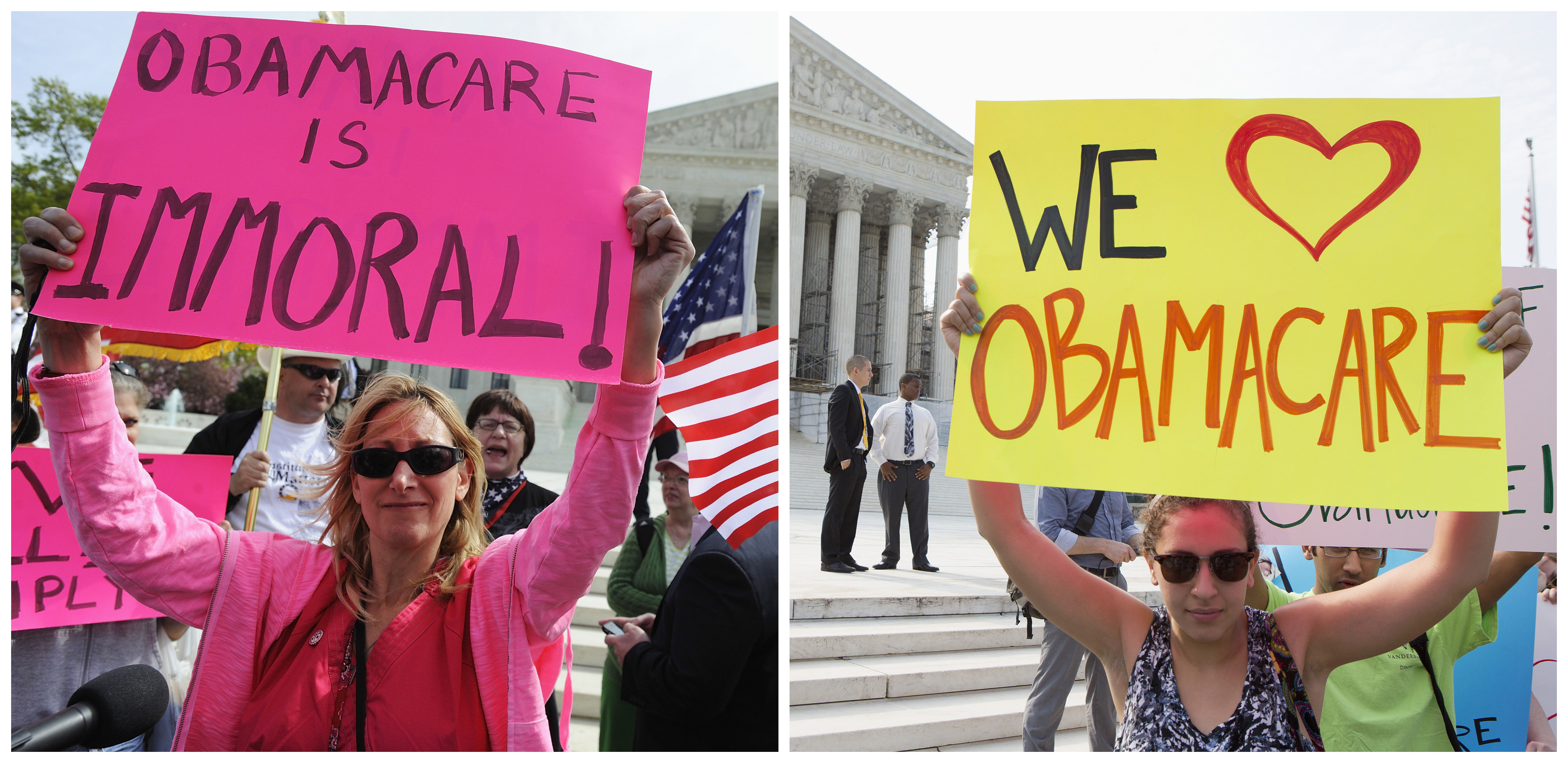
A combination file photo shows opponents (L) and supporters (R) of Affordable Healthcare Act rally on the sidewalk at the Supreme Court in Washington on March 28, 2012 and on June 28, 2012 respectively. The Obama administration said on July 2, 2013 it would not require employers to provide health insurance for their workers until 2015, delaying a key provision of President Barack Obama's healthcare reform law by a year, to beyond the next election.  REUTERS/Jonathan Ernst (L) and  REUTERS/Joshua Roberts (R)  (UNITED STATES - Tags: POLITICS HEALTH) - RTX11B3H
REUTERS/Jonathan Ernst (L) and REUTERS/Joshua Roberts (R)

Let’s consider each Title, one by one: Continue reading “Hidden ACA (1) — An Alternative Report Card”